01
Your natural leadership style
What happens when nobody assigns the roles?
A private three-course corporate leadership experience where strategy, human behaviour and team dynamics become visible in real time. The restaurant is closed to the public and reserved exclusively for the experience, creating an intimate setting in which teams can step outside the usual workplace and discover how they communicate, decide, collaborate and lead when the script changes.
And it is not traditional team building.
The Leadership Lunch Experiment places each company team inside a carefully designed sequence of challenges. As conditions evolve, participants must interpret information, allocate limited resources, communicate clearly, negotiate, adapt and make decisions without a predetermined script.
The restaurant is closed to the public and dedicated exclusively to the experience. This creates a focused, intentionally intimate environment where teams can engage fully, without the distractions or formality of a conventional corporate setting.
People by People brings expertise in people strategy, talent, leadership, team performance and organisational development. Their role is to bring the strategic people perspective into the experience, helping reveal how teams communicate, collaborate, lead, adapt and perform when situations become less predictable.
You experience it first. Then we reveal what happened — and what it says about the way people naturally work together.
Company teams arrive at the private venue and take their designated tables. The format is designed around intimate teams, allowing every participant to contribute and be seen within the experience.
A premium three-course lunch is served while the first challenges begin to unfold. The lunch is not a break from the programme; it is part of the environment in which the team is observed.
Teams receive missions, information and resources. Every decision can influence what happens next.
New situations are introduced. Plans change. Resources become more valuable. People have to react.
Teams make their final decisions and complete the experiment. A winning team is recognised, but the greater value lies in what the process reveals about each team.
The experts debrief what happened at the tables: leadership patterns, communication, decision-making, trust, influence, collaboration, adaptability and behaviour under pressure. Teams leave with practical observations they can take back into the workplace.
Each company enters as a team. The experience is designed to reveal how people communicate, decide, lead, collaborate and respond together when the usual workplace structures are removed.
What happens when nobody assigns the roles?
How you respond when information is incomplete or changing.
Who creates direction when the room becomes less predictable.
How resources are shared, protected, traded and prioritised.
Where information flows well — and where it begins to break down.
How personalities affect collective decisions, competition, change and opportunity.
The lunch is not a break between activities. The lunch is the environment.
Food lowers formality. It changes the atmosphere and creates a more natural environment for human behaviour to appear. That is precisely what makes this different from a conventional workshop.
Two experienced leadership professionals accompany the experiment from different perspectives: one works directly with the teams inside the experience; the other observes leadership dynamics, analyses behaviour and turns what happens at the table into practical guidance for future growth.
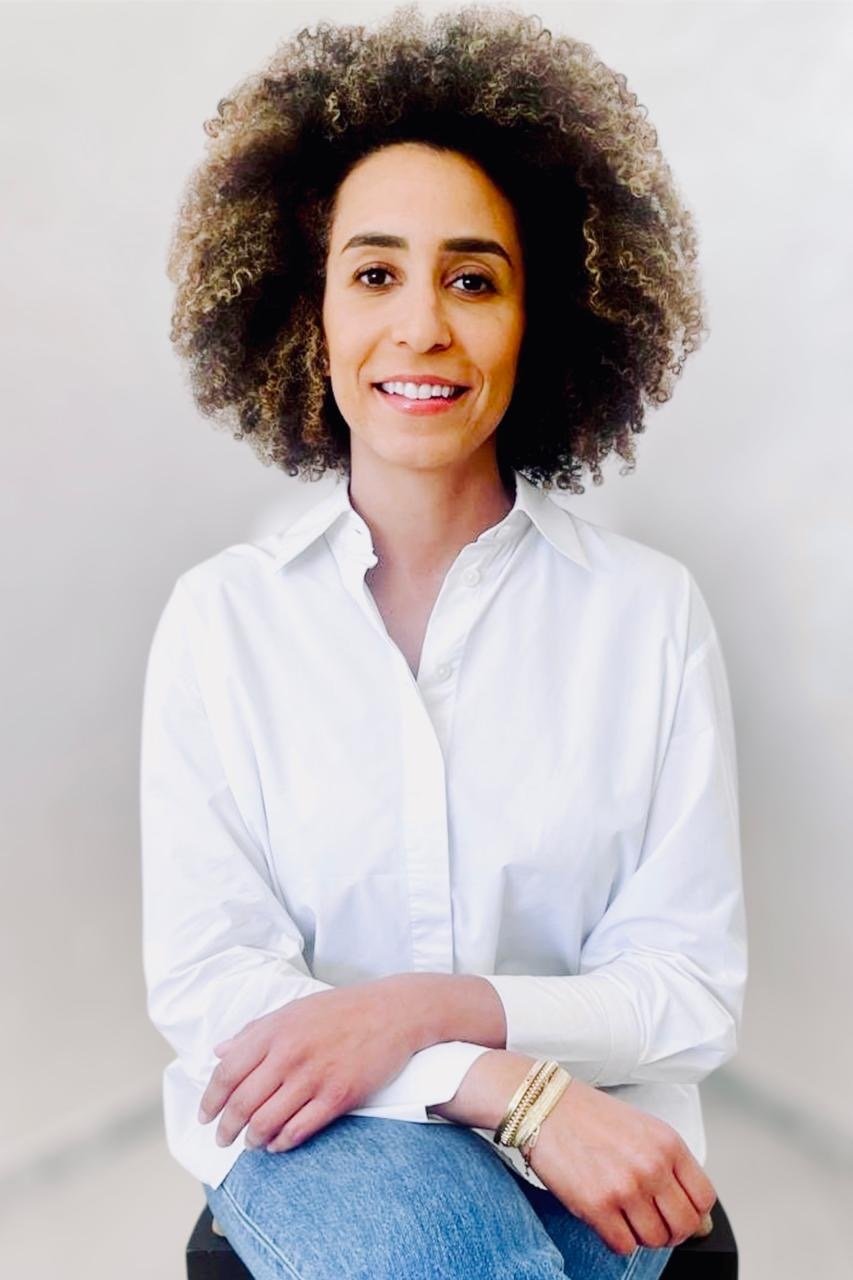
Founder, advisor and leadership coach with 16+ years across investment banking, consulting, senior leadership and transformation. Radia observes the experiment through a leadership and performance lens, analysing how people influence, decide, communicate and respond when conditions change. She identifies emerging leadership styles, strengths, blind spots and patterns that may be limiting progress, then provides focused guidance to help leaders increase self-awareness, unlock blocks and translate what was revealed into more conscious, effective action.
The experts follow the dynamics as they unfold: who takes the lead, who creates clarity, how trust shifts, how decisions are made and what changes when pressure enters the room.
For leaders who believe that individual talent matters, but sustainable success comes from how people work together: how they communicate, trust, take responsibility, adapt and move in the same direction.
For organisations that see culture as something people practise every day, not simply something written in a values document.
For leaders willing to look beyond titles and observe how leadership actually appears through decisions, pressure, trust, influence and accountability.
For companies entering a new stage, scaling, restructuring or simply wanting their people to work with greater clarity, resilience and alignment.
For businesses that know one person can move a task forward, but an aligned team can move the company forward.
The format is intentionally intimate. Each company has its own table, and the restaurant is closed to the public and reserved exclusively for the experience. The room is deliberately limited so every participant has space to contribute and the experts can observe team dynamics with depth and precision.
Business has spent decades teaching people how to perform inside predictable environments: meetings, presentations, workshops and assessments.
The Leadership Lunch Experiment creates a controlled environment where those dynamics can be experienced, observed and discussed around one table. It is not entertainment for its own sake. It is an investment in the human system behind the business: the way people trust, communicate, take responsibility, adapt and move together when conditions are not perfect.
See what happens when hierarchy becomes less visible, information changes and the team has to decide together. The value is not in performing correctly. It is in seeing the team more clearly.
The restaurant is privately reserved for the experience, and participation is intentionally limited to protect the quality, focus and intimacy of the room.